Ohio Plumber Liability Insurance

9:00am - 5:00pm Mon-Fri
We'll Reply in 15min*
A single burst pipe in a basement can produce thousands of dollars in property damage within minutes. For Ohio
plumbing contractors, that kind of scenario isn't hypothetical: it's a routine occupational risk. Whether you're replacing a water heater in a Westerville split-level or roughing in supply lines for a
new commercial build in Akron, the potential for water damage claims follows every job you take. Your liability insurance is the financial barrier between a manageable incident and a business-ending lawsuit. Understanding how your policy responds to water damage claims, what it excludes, and what Ohio specifically requires of you in 2026 isn't optional knowledge. It's the foundation of a sustainable plumbing business. This guide covers the coverage types, state requirements, policy add-ons, and common exclusions that every Ohio plumbing contractor should understand before the next
service call goes sideways.
Why Ohio Plumbers Need Specific Water Damage Protection
Water damage is the most frequent and expensive category of liability claim filed against plumbing contractors. A standard general liability policy provides a baseline, but plumbing work creates risks that generic coverage wasn't designed to address. Slow leaks behind walls, improperly soldered joints, and failed supply line connections can all cause damage that doesn't surface for weeks or months after the job is complete.
Ohio's climate compounds the problem. Freeze-thaw cycles from November through March put enormous stress on pipes, and a contractor who winterizes a system incorrectly may not hear about the resulting burst until spring. The legal framework for residential construction disputes in Ohio has also shifted: residential projects exceeding $25,000 now fall under the Home Construction Service Suppliers Act (HCSSA) rather than the Consumer Sales Practices Act, changing how claims are litigated and what damages homeowners can pursue.
Common Water Damage Scenarios in Residential and Commercial Jobs
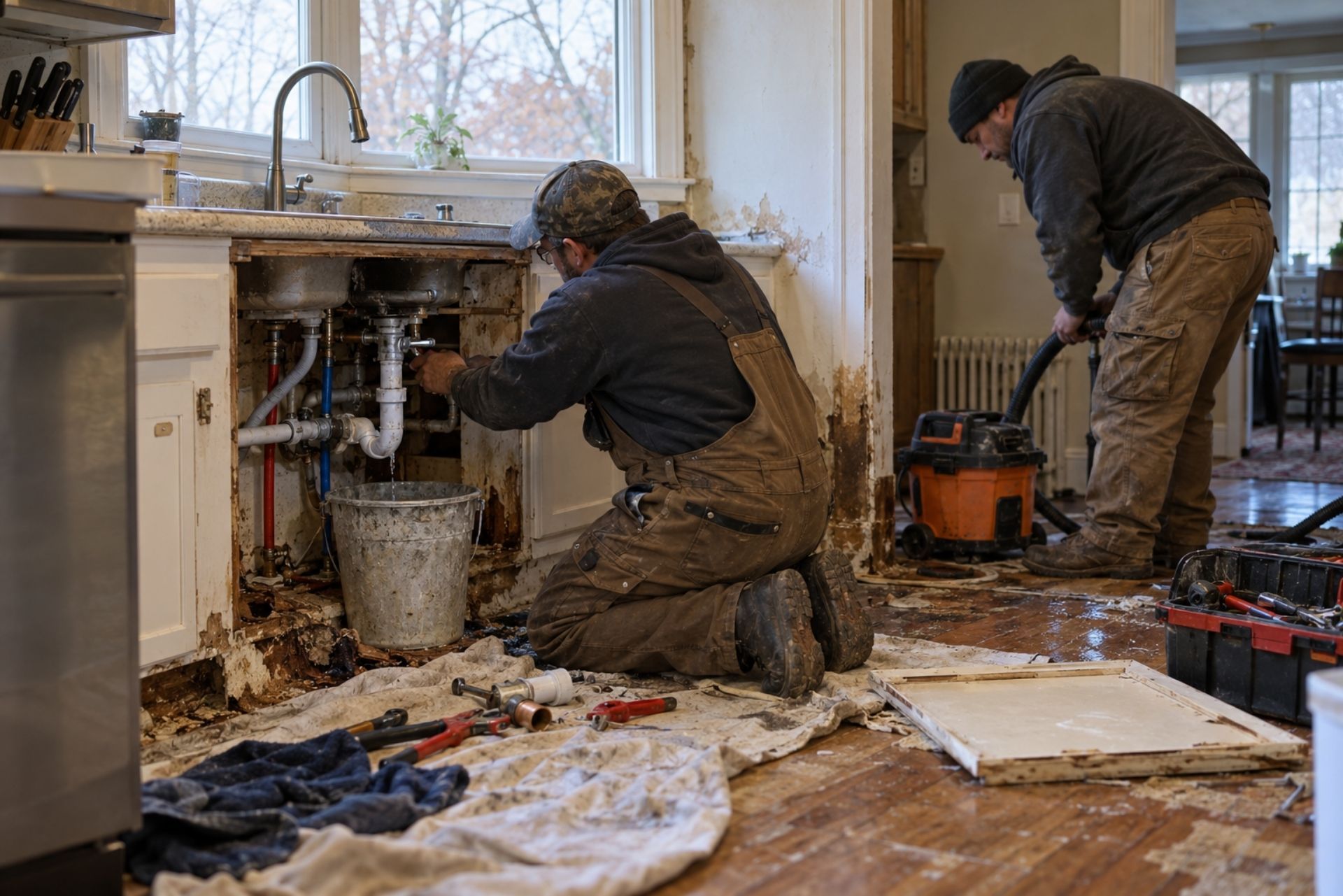
Residential claims often stem from supply line failures, toilet feed connections, and water heater installations. A fitting that fails under pressure while you're on another job across town can flood an entire first floor before anyone notices. Commercial jobs carry their own risks: fire suppression tie-ins, boiler connections, and multi-story drain lines where a single failed joint can cascade damage through several floors.
Slab leak repairs present a particular hazard. Cutting into a concrete slab to access a supply line risks hitting other utilities, and any repair that doesn't hold can cause damage that's invisible until mold develops months later.
The Financial Impact of Mold and Structural Damage Claims
Mold remediation can be a significant expense for a single-family home, depending on the extent of growth. Structural damage from prolonged water exposure, including rotted joists, warped subfloors, and compromised drywall, often doubles or triples the total claim value. A plumbing contractor without adequate coverage could face a six-figure judgment from a single residential job gone wrong.
The 2026 Ohio Supreme Court ruling in Hoskins v. City of Cleveland
clarified the definition of what constitutes a "physical defect" in property, which has implications for how water damage claims are evaluated in court. Contractors should be aware that Ohio courts are actively refining the standards for property damage liability.

By: Aaron McElwain
President of Bellwether Insurance
Understanding General Liability vs. Professional Liability
These two policy types protect against different risks, and confusing them is one of the most common mistakes plumbing contractors make. General liability (GL) covers bodily injury and property damage caused by your work or your business operations. Professional liability, sometimes called errors and omissions (E&O), covers claims arising from your professional advice, design recommendations, or failure to meet a professional standard of care.
For most plumbing contractors, general liability is the primary policy. It's what responds when your apprentice accidentally kicks a supply line loose and floods a customer's kitchen. Professional liability becomes relevant if you're designing plumbing systems, specifying equipment, or providing engineering-level consultation.
Comparison of Coverage Types for Plumbing Contractors
| Feature | General Liability (GL) | Professional Liability (E&O) |
|---|---|---|
| Covers property damage from your work | Yes | No |
| Covers faulty design or advice | No | Yes |
| Required by Ohio for registration | Yes | No |
| Covers completed operations | With endorsement | No |
| Typical annual cost | Varies by revenue/payroll | Varies by services offered |
| Most relevant for | Repair and installation work | System design and consulting |
Most Ohio plumbers doing repair and installation work need a strong GL policy first. Professional liability is a secondary consideration unless your scope includes system design or engineering consultation.
Ohio State Insurance Requirements and Licensing Standards
Ohio tightened its contractor insurance requirements effective January 1, 2026. Every plumbing contractor performing residential home improvement work must now carry commercial general liability insurance and a surety bond to maintain statewide registration. These aren't suggestions: they're prerequisites for legal operation.
The Ohio Construction Industry Licensing Board (OCILB) handles plumbing-specific licensing, but the broader home improvement registration requirements apply to plumbers doing residential work as well. Failing to maintain required coverage can result in license suspension, fines, and personal liability for any claims that arise during a coverage lapse.
Minimum Liability Limits for OCILB Compliance
Ohio now requires all home improvement contractors to maintain at least $500,000 in commercial general liability insurance for statewide registration. This is the floor, not the ceiling. Many general contractors and property managers require their plumbing subcontractors to carry $1,000,000 per occurrence and $2,000,000 aggregate before they'll allow them on a job site.
If you're bidding on commercial work or projects for institutional clients like schools or hospitals, expect insurance requirements to be even higher. Umbrella policies can bridge the gap between your base GL limits and the amounts required by project owners.
The Role of Surety Bonds in Water Damage Incidents
A surety bond isn't insurance: it's a financial guarantee to the homeowner. Ohio home improvement contractors are now required to carry a $25,000 surety bond to provide financial recourse for homeowners regarding code violations or uncompleted work. If you install a water heater that violates code and causes damage, the bond gives the homeowner a path to recover costs even if your insurance doesn't fully cover the claim.
The bond protects the consumer, not you. If the bonding company pays out on a claim, they'll come after you for reimbursement. Think of it as a backstop that keeps you personally accountable for the quality of your work.
Essential Policy Add-Ons for Maximum Protection
A base GL policy covers a lot, but it leaves significant gaps for plumbing contractors. Two endorsements in particular can mean the difference between a covered claim and a denial letter.
Completed Operations Coverage for Long-Term Leaks
Standard GL policies cover damage that happens while you're actively working on a job. Completed operations coverage extends that protection to damage discovered after you've finished the work and left the property. For plumbers, this is critical. A soldered joint that holds during pressure testing but fails three months later is a completed operations claim.
Without this endorsement, you're exposed to every slow leak, every gradual fitting failure, and every seasonal freeze event that damages work you completed in the past. Most insurers offer completed operations as a standard part of the GL policy, but verify that it's included and understand the time limits. Some policies cap completed operations coverage at two or three years after project completion.
Pollution Liability for Sewer and Wastewater Backups
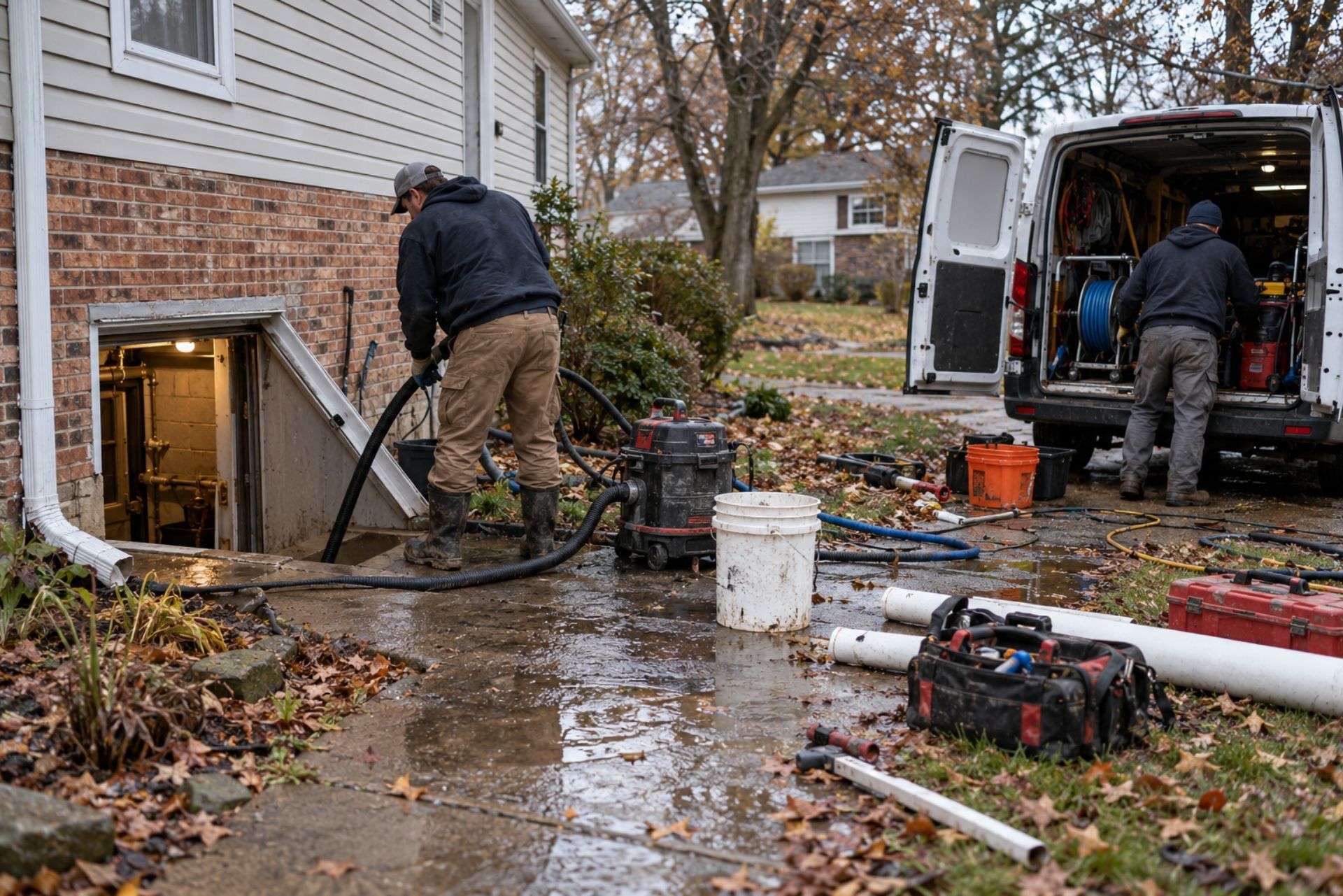
Standard GL policies almost universally exclude pollution-related claims, and sewer backups qualify as pollution events under most policy definitions. If you're doing drain cleaning, sewer line repair, or septic work, a pollution liability endorsement is essential. A sewer backup that floods a finished basement with wastewater creates both a property damage claim and a potential health hazard, and your base policy won't touch it.
Pollution liability endorsements vary widely in scope and cost. Some cover only sudden and accidental discharges, while others extend to gradual contamination. Make sure your endorsement matches the type of work you actually perform.
Common Questions About Plumbing Insurance in Ohio
Does my basic policy cover mold growth from a slow leak? Only if you carry a fungus and bacteria endorsement. Most standard GL policies exclude mold-related claims entirely. If your work causes a slow leak that leads to mold growth, the water damage itself might be covered, but the mold remediation costs won't be unless you've added this specific endorsement. Given that mold claims frequently exceed the cost of the initial water damage, this add-on is worth the premium for any plumber doing residential work.
How much insurance does the state of Ohio require me to have? Ohio requires a minimum of $500,000 in commercial general liability insurance for home improvement contractor registration as of January 1, 2026. You'll also need a $25,000 surety bond. These are minimums: many contractors carry $1,000,000 per occurrence to meet the requirements of general contractors and commercial clients who hire them as subcontractors.
Will insurance pay for the pipe I broke, or just the water damage? General liability covers the resulting damage to the property, not the cost to redo your own work. If you install a fitting incorrectly and it causes a flood, your policy will pay for the damaged flooring, drywall, and personal property. The cost to go back and fix the fitting itself comes out of your pocket. This is known as the "your work" exclusion, and it exists in virtually every GL policy.
Can I get insurance if I only do residential repair work? Yes. Insurers offer policies tailored to small residential plumbing operations. Your premium will reflect your revenue, payroll, and the specific services you provide. A solo plumber doing drain cleaning and fixture replacements will pay less than a crew handling new construction rough-ins and water heater installations. The key is accurately describing your operations to your insurer so your coverage matches your actual risk.
Before You Buy a Policy
Choosing plumbing contractor liability insurance for water damage claims in Ohio isn't a one-size-fits-all decision. Your policy needs to reflect the specific work you do, the size of your operation, and the clients you serve. A plumber doing $80,000 a year in residential service calls has very different coverage needs than a contractor running $500,000 in new construction projects.
Start by confirming your policy includes completed operations coverage and ask specifically about mold and pollution exclusions. Request certificates of insurance from any subcontractors you hire, because their uninsured mistakes can become your liability. Review your policy annually, especially as Ohio continues to refine its contractor registration and residential construction liability framework under the HCSSA.
Get quotes from at least three insurers who specialize in contractor coverage. A general business insurance agent may not understand the nuances of plumbing-specific risks. The right policy protects your business, your personal assets, and your ability to keep working after a claim. Don't wait for a flooded basement to find out what your policy actually covers.
About The Author:
Aaron McElwain, CIC
As President of Bellwether Insurance, I’m passionate about helping individuals and businesses protect what matters most through honest advice and reliable coverage. With my Certified Insurance Counselor (CIC) designation and years of industry experience, I focus on simplifying insurance, building lasting relationships, and delivering peace of mind through every policy we write.
OUR PERSONAL INSURANCE COVERAGE IN OHIO
Explore Personal Insurance Coverage in Ohio
We only work with outstanding insurance companies that offer great value and continually impress our clients.

Home Insurance
Protecting Ohio homes, ensuring comfort

Life Insurance
Safeguard futures, cherish moments

Umbrella Insurance
Extra coverage, ultimate peace

Car Insurance
On the road, confidently insured

Condo & Renters Insurance
Customized policies, worry-free living

Motorcycle Insurance
Ride fearlessly, enjoy the journey
Choose Bellwether Insurance Today for Personalized Protection
Get a Plan Tailored to Your Lifestyle
Bellwether Insurance evaluates the risks you and your family face, taking into account your assets, personal circumstances, and individual requirements to create a tailored insurance solution.
Recover with Confidence
With our personal insurance coverage, you'll be prepared to bounce back from unforeseen events that could have left you and your family in a difficult financial situation.
Avoid Overpaying
Through customized insurance plans, you'll receive adequate coverage without unnecessary costs. At Bellwether Insurance, we strive to keep premiums cost-effective while providing the protection you need.
Review from our Clients
Customer Testimonials
See why Ohio residents work with Bellwether Insurance Agency in LaGrange, Ohio


Arun K.
Personal Insurance Client
After a decade old relationship with a premium and commercial insurance provider.. my switch to Bellwether has left me wondering why I waited so long. Primarily my experience has been dealing with Jessica Fox.. and she's been awesome to work with. She's super responsive, stays on top to follow up on your enquiries and really gets things done to delight customers.

Rob J.
Personal Insurance Client
Absolute pleasure to work with. Sandra has taken care of all my insurance needs for over 2 years now. Bellwether was able to save me quite a bit of money over previous carrier. Always giving heads up on any changes, or weather it’s time to check for new price she’s on top of it. I recommend them often to friends and family.

Nick W.
Personal Insurance Client
Aaron and Sandra are amazing! I faithfully stayed with my previous insurance for over ten years until I had them review my policies. Wish I would have done it years ago. Saved me quite a bit of money as well as gaining coverage what's not to love? They respond very quickly and professionally. I work in sales as a profession so it's great to see that level of attention and attentiveness provided here. Stop your search and give them a shot you won't regret it. On a side note even though it is something so small I love the fact they send laminated copies of insurance cards anytime you make a change. 10/10

Bobby P.
Personal Insurance Client
Bellwether Insurance is the best ever! Always there when I need them and always has the answers with quick replies. I will never go with a different Insurance Agent. If I could, I would give then a 10 Star review! Thanks Sandra for all your help!