
Electrical Contractor Fleet Insurance

9:00am - 5:00pm Mon-Fri
We'll Reply in 15min*
Running an electrical contracting business means your vehicles, trailers, and specialized equipment are on the road daily, exposed to theft, collisions, and liability claims. A single uninsured accident involving a loaded service van or a detached cable trailer can cost tens of thousands of dollars and stall active projects. Fleet insurance designed for
electrical contractors covers your autos, trailers, and equipment under a unified policy, giving you consistent protection across every asset that leaves your shop. With commercial auto insurance rates for contractors surging between 7% and 20% at renewal in 2026, driven by a
14% increase in vehicle repair costs over the past two years, understanding what you're buying has never been more financially significant. This guide breaks down the coverage types, premium factors, and policy details you need to make a confident purchasing decision.
Understanding Fleet Insurance for Electrical Contractors
Fleet insurance bundles multiple vehicles, trailers, and mobile assets under one commercial policy. For electrical contractors, this typically means grouping service vans, bucket trucks, flatbed trailers, and sometimes personal vehicles used for business into a single program. The structure simplifies administration: one renewal date, one insurer, and one set of coverage terms rather than a patchwork of individual policies.
Most insurers define a "fleet" as five or more vehicles, though some will write policies for as few as two. The key advantage is pricing consistency. Instead of underwriting each vehicle separately, the carrier evaluates your fleet as a whole, which often produces lower per-unit premiums and eliminates gaps where one vehicle might carry different limits than another.
Why Standard Personal Auto Policies Fall Short
Personal auto policies exclude vehicles used for commercial purposes. If an electrician drives a personally insured pickup to a job site and causes an accident while hauling wire spools, the carrier can deny the claim entirely. Personal policies also won't cover employees driving company vehicles, and they exclude tools and equipment stored inside the vehicle.
Commercial fleet policies are built around business use. They account for heavier vehicle weights, employee drivers, job-site travel patterns, and the specialized cargo electrical contractors carry. Trying to save money with personal coverage is one of the most common and costly mistakes we see contractors make.
Defining Your Fleet: Trucks, Vans, and Utility Vehicles
Your fleet likely includes more vehicle types than you realize. Cargo vans and service trucks are obvious, but fleet policies should also cover bucket trucks, boom lifts mounted on chassis, utility trailers, and any leased or rented vehicles your crews use regularly. Even a company-owned sedan used by a project manager qualifies.
When building your vehicle schedule, list every asset by VIN, weight class, and primary use. Insurers price each unit based on these details, and omitting a vehicle means it won't be covered if something goes wrong. A thorough inventory also helps you spot underinsured assets before a claim forces the discovery.

By: Aaron McElwain
President of Bellwether Insurance
Core Coverage for Trailers and Specialized Equipment
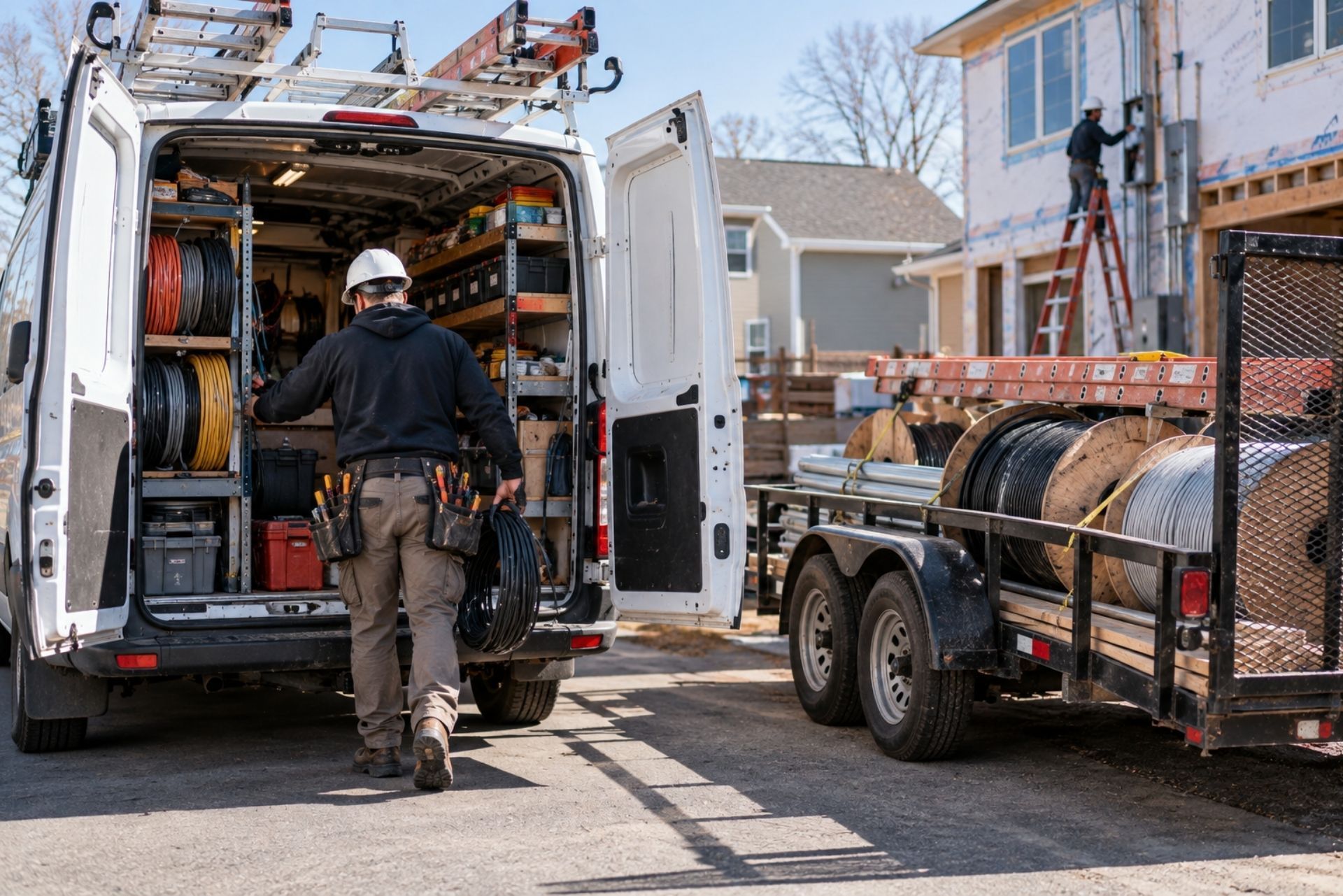
Trailers and equipment represent a significant portion of an electrical contractor's capital investment. A cable-pulling trailer loaded with copper wire can easily represent $30,000 or more in combined value. Standard commercial auto liability covers damage your trailer causes to others, but it won't pay to repair or replace the trailer itself, or the contents inside it.
You need coverage layers that address both the physical assets and their contents. This means pairing commercial auto with inland marine and potentially equipment breakdown policies to close every gap.
Physical Damage and Theft Protection for Trailers
Physical damage coverage for trailers works similarly to collision and comprehensive coverage on your trucks. Collision pays when your trailer is damaged in an accident, while comprehensive covers theft, vandalism, fire, and weather events. Trailers parked overnight at job sites are particularly vulnerable to theft, and equipment breakdown claims have risen steadily as replacement costs climb.
Make sure your policy values each trailer at its current replacement cost rather than actual cash value. The difference matters: a five-year-old enclosed trailer with $2,000 in depreciation will leave you underinsured at the worst possible moment if you're carrying ACV coverage.
Inland Marine: Protecting Tools and Electrical Gear in Transit
Inland marine insurance is the policy that covers your tools, testing equipment, wire, conduit, and other materials while they're being transported or stored at a job site. Despite the name, it has nothing to do with water. It evolved from ocean cargo insurance and now covers property "in transit" over land.
For electrical contractors, this is critical. A Megger insulation tester, a thermal imaging camera, and a set of hydraulic benders can represent $15,000 or more in a single van. Inland marine policies typically cover these items against theft, damage, and loss whether they're in the vehicle, at a job site, or temporarily stored at a warehouse. Without this coverage, your commercial auto policy won't pay for stolen tools, even if they were locked inside your truck.
Choosing the Right Level of Protection
Selecting coverage isn't just about meeting your state's minimum liability requirements. It's about matching your policy to the real financial exposure your business faces. A $50,000 liability limit might satisfy state law, but a single serious accident involving a bucket truck could generate claims well into six figures.
Comparison: Basic Liability vs. Comprehensive Fleet Coverage
The table below illustrates the gap between minimum coverage and a well-structured fleet policy:
| Coverage Element | Basic Liability Only | Comprehensive Fleet Policy |
|---|---|---|
| Bodily Injury Liability | State minimum (often $25K/$50K) | $1M combined single limit |
| Property Damage Liability | State minimum (often $25K) | $1M combined single limit |
| Collision (your vehicles) | Not included | Included with deductible |
| Comprehensive (theft, fire) | Not included | Included with deductible |
| Trailer Physical Damage | Not included | Replacement cost coverage |
| Inland Marine (tools/equipment) | Not included | Scheduled or blanket coverage |
| Hired & Non-Owned Auto | Not included | Included |
| Uninsured Motorist | Varies by state | Included |
The cost difference between these two approaches is real, but so is the risk. One theft of a loaded trailer or one at-fault accident with injuries can exceed basic liability limits within hours.
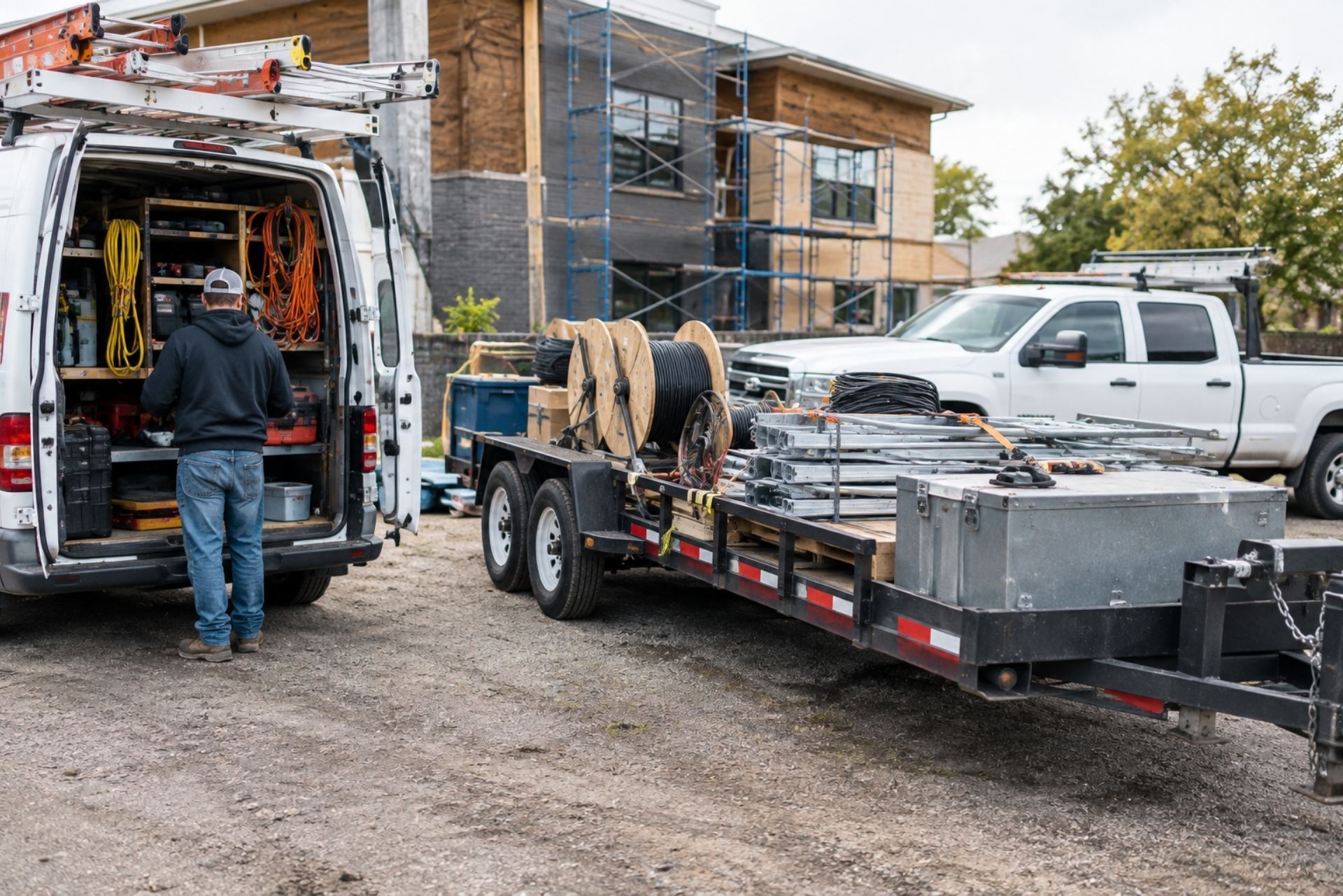
Premiums for electrical contractor fleet coverage depend on a combination of driver profiles, vehicle specifications, geographic factors, and claims history. Understanding these variables helps you control costs without sacrificing protection.
The 2026 construction insurance market outlook shows that carriers are tightening underwriting standards across the board. Contractors with clean loss histories and documented safety programs are getting the best rates, while those with frequent claims face non-renewal or steep surcharges.
Driver Safety Records and MVR Checks
Every insurer pulls motor vehicle reports on your drivers. A single DUI or multiple moving violations on one employee's record can increase your entire fleet premium by 15% to 25%. Some carriers will refuse to cover that driver at all, requiring you to either exclude them from the policy or find a different insurer.
We recommend running MVR checks before hiring and annually thereafter. Establishing a written fleet safety policy that includes distracted driving rules, speed limits for company vehicles, and consequences for violations signals to underwriters that you're managing risk proactively. That documentation can translate directly into premium credits.
Vehicle Weight Classes and Usage Radius
A Ford Transit cargo van and a Class 7 bucket truck don't carry the same premium. Heavier vehicles cause more damage in accidents and cost more to repair, so they're rated higher. Insurers also consider your typical operating radius. A fleet that stays within a 50-mile radius of your shop presents less highway exposure than one traveling across state lines for commercial projects.
If your electricians occasionally drive personal vehicles for business errands, that creates a hired and non-owned auto exposure. This coverage is inexpensive to add and prevents a gap that could leave your business liable for an accident in a vehicle you don't own. The
commercial auto insurance options available to contractors vary widely, so comparing quotes from multiple carriers is worth the effort.
Common Questions About Electrical Fleet Policies
Does my insurance cover tools stolen from the back of my truck?
Your commercial auto policy typically won't cover tools or equipment inside the vehicle. You need an inland marine or contractor's tools and equipment policy for that. These policies cover theft whether the tools were in your truck, at a job site, or in a temporary storage location.
What happens if a trailer unhooks and causes an accident?
Your commercial auto liability should cover third-party injuries and property damage caused by a detached trailer, as long as the trailer is listed on your policy. Physical damage to the trailer itself requires separate collision coverage. If the trailer wasn't scheduled on your policy, you could face a denied claim.
Can I add new vans to my policy mid-year?
Yes. Most fleet policies allow you to add or remove vehicles at any time. Your premium adjusts pro-rata for the remainder of the policy term. Many insurers offer a 30-day grace period for newly acquired vehicles, but you should notify your agent within a few days to avoid any coverage dispute.
Do I need separate insurance for hired or non-owned vehicles?
You should carry hired and non-owned auto coverage as part of your fleet policy. This protects your business when employees drive rental vehicles or their personal cars for work purposes. Without it, an accident in a rented box truck could leave your company exposed to a liability claim with no coverage in place.
How does the deductible work for a multi-vehicle claim?
If a single event damages multiple vehicles in your fleet, such as a hailstorm hitting your parking lot, most policies apply one deductible per vehicle. Some insurers offer a "single event" deductible option that caps your total out-of-pocket cost regardless of how many vehicles are affected. Ask your agent about this option, especially if your vehicles are parked together overnight.
Before You Buy a Policy
Getting fleet insurance right means more than finding the cheapest quote. Start by building a complete asset inventory: every vehicle, trailer, and piece of mobile equipment your business owns or regularly uses. Assign replacement values, not purchase prices, to each item.
Next, audit your driver roster. Pull MVR reports, document your safety training program, and remove any excluded drivers from vehicle access. These steps don't just protect you from claims; they directly reduce your premiums. Carriers writing construction-sector commercial auto policies are paying close attention to loss control measures in 2026, and contractors who invest in safety are being rewarded with better terms.
Request quotes from at least three carriers, and make sure each quote covers the same limits, deductibles, and coverage types so you're comparing equivalent protection. Pay special attention to inland marine limits, trailer valuations, and whether hired and non-owned auto is included. A policy that looks cheaper on paper but excludes your tools or trailers isn't actually saving you anything.
Your fleet is the backbone of your daily operations. Protecting it with the right insurance structure keeps your crews working, your equipment covered, and your business financially stable when the unexpected happens. Take the time to get this right, because the cost of being underinsured is always higher than the cost of proper coverage.
About The Author:
Aaron McElwain, CIC
As President of Bellwether Insurance, I’m passionate about helping individuals and businesses protect what matters most through honest advice and reliable coverage. With my Certified Insurance Counselor (CIC) designation and years of industry experience, I focus on simplifying insurance, building lasting relationships, and delivering peace of mind through every policy we write.
OUR PERSONAL INSURANCE COVERAGE IN OHIO
Explore Personal Insurance Coverage in Ohio
We only work with outstanding insurance companies that offer great value and continually impress our clients.

Home Insurance
Protecting Ohio homes, ensuring comfort

Life Insurance
Safeguard futures, cherish moments

Umbrella Insurance
Extra coverage, ultimate peace

Car Insurance
On the road, confidently insured

Condo & Renters Insurance
Customized policies, worry-free living

Motorcycle Insurance
Ride fearlessly, enjoy the journey
Choose Bellwether Insurance Today for Personalized Protection
Get a Plan Tailored to Your Lifestyle
Bellwether Insurance evaluates the risks you and your family face, taking into account your assets, personal circumstances, and individual requirements to create a tailored insurance solution.
Recover with Confidence
With our personal insurance coverage, you'll be prepared to bounce back from unforeseen events that could have left you and your family in a difficult financial situation.
Avoid Overpaying
Through customized insurance plans, you'll receive adequate coverage without unnecessary costs. At Bellwether Insurance, we strive to keep premiums cost-effective while providing the protection you need.
Review from our Clients
Customer Testimonials
See why Ohio residents work with Bellwether Insurance Agency in LaGrange, Ohio


Arun K.
Personal Insurance Client
After a decade old relationship with a premium and commercial insurance provider.. my switch to Bellwether has left me wondering why I waited so long. Primarily my experience has been dealing with Jessica Fox.. and she's been awesome to work with. She's super responsive, stays on top to follow up on your enquiries and really gets things done to delight customers.

Rob J.
Personal Insurance Client
Absolute pleasure to work with. Sandra has taken care of all my insurance needs for over 2 years now. Bellwether was able to save me quite a bit of money over previous carrier. Always giving heads up on any changes, or weather it’s time to check for new price she’s on top of it. I recommend them often to friends and family.

Nick W.
Personal Insurance Client
Aaron and Sandra are amazing! I faithfully stayed with my previous insurance for over ten years until I had them review my policies. Wish I would have done it years ago. Saved me quite a bit of money as well as gaining coverage what's not to love? They respond very quickly and professionally. I work in sales as a profession so it's great to see that level of attention and attentiveness provided here. Stop your search and give them a shot you won't regret it. On a side note even though it is something so small I love the fact they send laminated copies of insurance cards anytime you make a change. 10/10

Bobby P.
Personal Insurance Client
Bellwether Insurance is the best ever! Always there when I need them and always has the answers with quick replies. I will never go with a different Insurance Agent. If I could, I would give then a 10 Star review! Thanks Sandra for all your help!