
Ohio HVAC Pollution Liability Insurance

9:00am - 5:00pm Mon-Fri
We'll Reply in 15min*
A single refrigerant leak from a commercial rooftop unit can trigger thousands of dollars in EPA fines, environmental remediation costs, and third-party injury claims. For
Ohio HVAC contractors, the financial exposure has grown sharply since January 2026, when federal leak repair thresholds dropped to capture equipment that previously flew under the radar. Standard general liability policies don't cover pollution events, which means a routine service call gone wrong could become a business-ending liability. Understanding pollution liability insurance for HVAC refrigerant releases in Ohio requires a clear grasp of EPA Section 608 rules, the types of claims you're likely to face, and the policy exclusions that could leave you exposed. This guide breaks down each of those elements so you can make informed coverage decisions and protect your
contracting business from environmental risk.
Understanding Ohio HVAC Environmental Risks
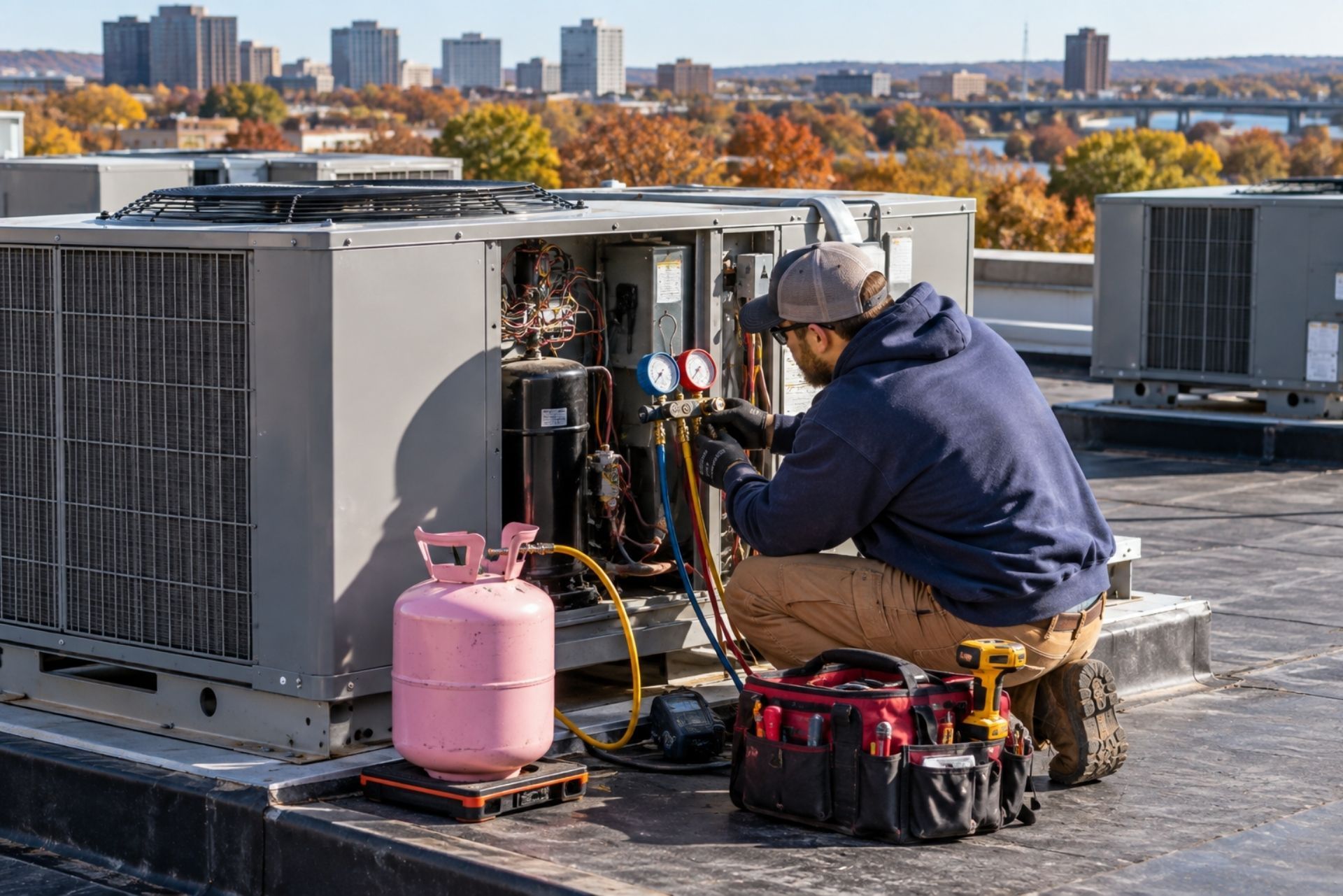
Ohio's commercial building stock includes thousands of older rooftop units, chillers, and split systems that use refrigerants ranging from legacy R-22 to the widely adopted R-410A. Each of these systems carries pollution risk. A cracked evaporator coil, a botched brazing joint, or a corroded line set can release refrigerant into occupied spaces or the surrounding environment. The consequences range from indoor air quality complaints to contaminated soil and groundwater near condensing units.
Common Pollution Sources in Ohio HVAC Operations
Refrigerant releases are the most obvious pollution source, but they aren't the only one. Compressor oil spills, glycol leaks from hydronic systems, and improperly disposed refrigerant cylinders all create environmental liability. Mold growth from condensate drain failures and Legionella contamination in cooling towers add biological pollution to the mix. Ohio's freeze-thaw climate accelerates wear on copper line sets and fittings, making unintentional releases more common than contractors in milder states might expect. Each of these incidents can generate cleanup obligations, regulatory scrutiny, and third-party bodily injury claims.
Why Standard General Liability Isn't Enough
Most Ohio HVAC contractors carry
commercial general liability (CGL) insurance, and the
Ohio Construction Industry Licensing Board requires a minimum of $500,000 in contractor liability coverage for licensed commercial entities. That CGL policy, however, contains a standard pollution exclusion, often called the "absolute pollution exclusion." It removes coverage for bodily injury, property damage, and cleanup costs arising from the discharge, dispersal, or release of pollutants. Refrigerants qualify as pollutants under virtually every CGL form. As one industry analysis puts it, the coverage you count on is
precisely the coverage that steps aside when environmental exposure turns real. That gap is where pollution liability insurance becomes essential.

By: Aaron McElwain
President of Bellwether Insurance
EPA Section 608 Compliance for Ohio Contractors
EPA Section 608 of the Clean Air Act governs how refrigerants are handled, recovered, and reported. The 2026 rule changes have significantly expanded the number of Ohio systems subject to federal oversight, making compliance a front-burner issue for every contractor.
Refrigerant Management and Leak Repair Requirements
The most consequential change took effect on January 1, 2026: the EPA threshold for mandatory leak repair and recordkeeping for HFCs like R-410A dropped from 50 pounds to 15 pounds. This means commercial rooftop units, VRF systems, and even some larger residential installations now fall under federal leak repair mandates. Equipment owners whose systems exceed allowable leak rates, 10% for comfort cooling and 20% for commercial refrigeration, must complete a verified repair within 30 days. As one source noted, equipment that was invisible for decades is now squarely on the radar.
For contractors, this means you're more likely to encounter systems with documented leak histories and regulatory obligations. If you service a unit and fail to address a known leak, or if your repair work causes a new release, the liability chain can extend directly to your business.
Recordkeeping and Technician Certification Standards
Every technician who opens a refrigerant circuit must hold the appropriate EPA Section 608 certification: Type I for small appliances, Type II for high-pressure systems, Type III for low-pressure systems, or Universal for all categories. Ohio doesn't impose a separate state-level refrigerant certification, but the federal requirement is non-negotiable.
Recordkeeping obligations now apply to every system containing 15 or more pounds of HFC refrigerant. You must document the type and quantity of refrigerant added, the date of service, the leak rate calculation, and the disposition of recovered refrigerant. These records must be maintained for a minimum of three years. Sloppy documentation doesn't just invite EPA enforcement; it also weakens your position if a pollution liability claim arises and you need to demonstrate that your work met regulatory standards.
Fines and Penalties for Non-Compliance
EPA enforcement actions for Section 608 violations can result in civil penalties of up to $124,426 per day, per violation, as of 2026 (https://refleaklog.app/guides/epa-fine-calculator-2026). Criminal penalties for knowing and willful violations can include imprisonment. Ohio EPA may also pursue parallel enforcement under state environmental regulations. The financial risk from a single venting incident or recordkeeping failure can dwarf the cost of proper insurance coverage and compliance protocols.
Comparing Coverage: General Liability vs. Pollution Liability
The distinction between CGL and pollution liability insurance isn't academic. It determines whether your business survives a refrigerant release claim or absorbs the full cost alone.
Comparison Chart: Protection for HVAC Professionals
| Coverage Feature | General Liability (CGL) | Pollution Liability (CPL) |
|---|---|---|
| Bodily injury from non-pollution events | Covered | Not typically covered |
| Refrigerant release cleanup | Excluded | Covered |
| Third-party property damage from pollutants | Excluded | Covered |
| Mold or Legionella claims | Excluded | Covered (policy-dependent) |
| EPA defense costs | Excluded | Often included |
| Transportation pollution (hauling refrigerant) | Excluded | Available as endorsement |
| PFAS-related claims | Excluded | Increasingly excluded in 2026 |
| Typical annual premium range | Varies by payroll/revenue | Higher; risk-rated by operations |
One emerging trend worth watching: insurers are adding PFAS exclusions to pollution liability policies as they limit exposure to "forever chemical" liabilities. If your HVAC work involves fire suppression systems or facilities with PFAS-containing equipment, verify that your policy hasn't quietly carved out this coverage.
Pollution Liability Benefits for Ohio Businesses
A well-structured pollution liability policy does more than fill the gap left by your CGL. It provides specific protections tailored to the environmental risks HVAC contractors face daily.
Coverage for Sudden and Accidental Spills
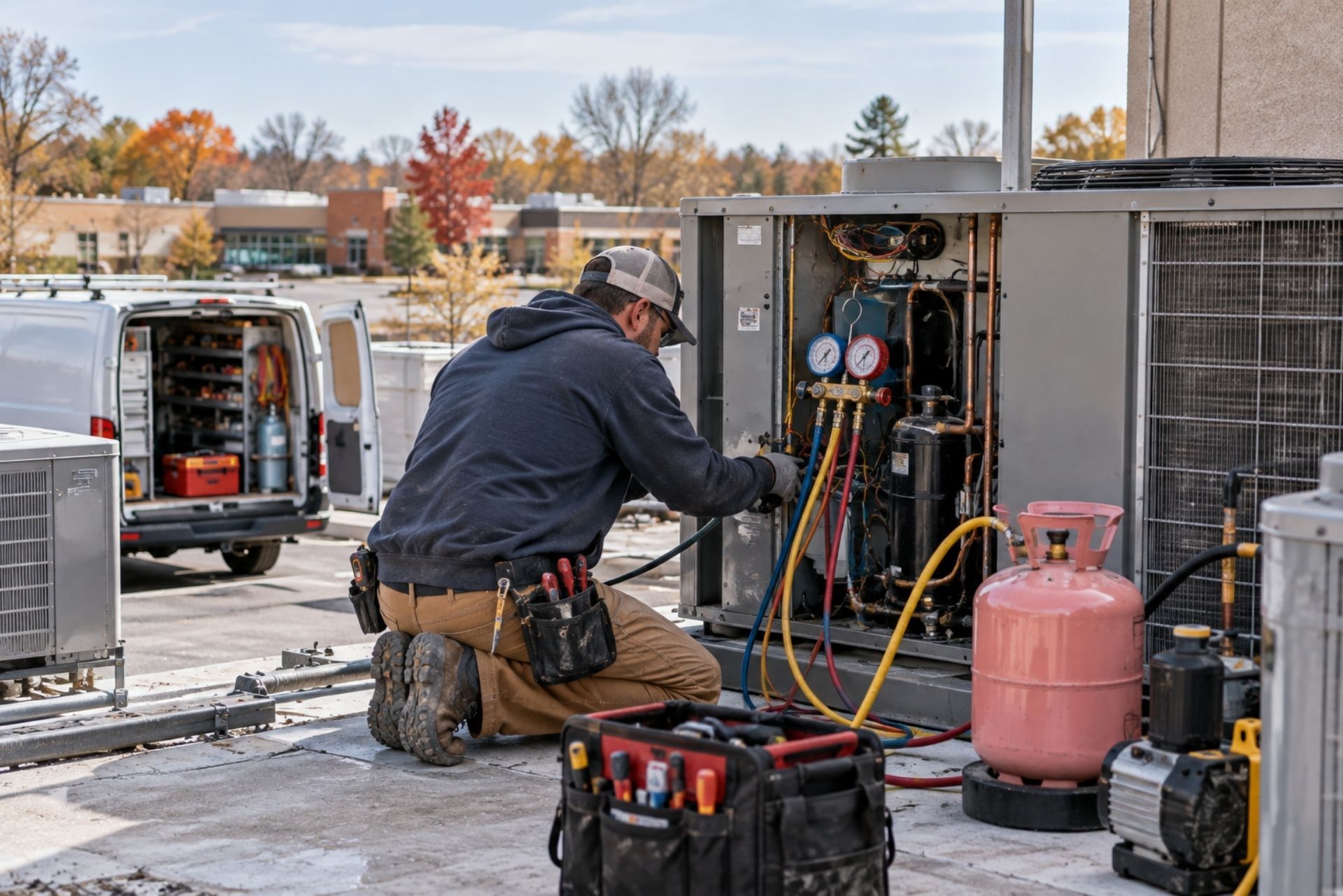
The most common HVAC pollution event is a sudden, accidental refrigerant release during service or installation. A technician over-tightens a flare fitting, a recovery machine malfunctions, or a brazing torch burns through a line set. Pollution liability policies typically cover the resulting cleanup, air monitoring, and any third-party claims that follow. Given that R-410A costs have risen to approximately $50 to $80 per pound due to supply scarcity in 2026, even the refrigerant replacement cost on a large commercial system can reach several thousand dollars before you account for remediation.
Protection Against Mold and Legionella Claims
Mold growth from improperly installed or maintained HVAC systems is one of the most frequent pollution claims Ohio contractors face. A condensate drain that backs up into a ceiling cavity can produce mold contamination requiring professional remediation costing tens of thousands of dollars. Legionella claims from cooling towers or large domestic hot water systems carry even higher stakes, since Legionnaires' disease can be fatal. Pollution liability policies with biological contaminant coverage protect against both the cleanup costs and the bodily injury claims these incidents generate.
Cleanup Costs and Third-Party Property Damage
When a refrigerant release contaminates an occupied building, the costs extend well beyond the mechanical repair. Emergency ventilation, indoor air quality testing, temporary relocation of building occupants, soil sampling near outdoor condensing units, and regulatory reporting all fall on the responsible contractor if standard CGL coverage doesn't apply. Third-party property damage claims, such as contaminated inventory in a retail space or spoiled product in a food service facility, add another layer of exposure. A pollution liability policy consolidates these costs under a single coverage form, providing defense costs and indemnity for covered claims.
Frequently Asked Questions About HVAC Pollution Coverage
Does my CGL policy cover any refrigerant-related claims at all? Most CGL policies contain an absolute pollution exclusion that removes coverage for any claim arising from the release of pollutants, including refrigerants. Some policies include a "hostile fire" exception, but it rarely applies to refrigerant events.
How much does pollution liability insurance cost for an Ohio HVAC contractor? Premiums vary based on your revenue, number of technicians, types of refrigerants handled, and claims history. Ohio is a competitive insurance market with rates approximately 10% below the national average (https://www.moneygeek.com/insurance/business/general-liability/ohio/cost/), though complex commercial operations may pay more.
Are R-410A and R-454B both considered pollutants under insurance policies? Yes. Insurance policies define "pollutant" broadly to include any irritant, contaminant, or substance that can cause harm when released. Both HFC and HFO-blend refrigerants fall within this definition.
Do I need pollution liability if I only do residential work? The risk is lower but not zero. A refrigerant release in a tightly sealed residential building can cause occupant health complaints and trigger cleanup obligations. If your residential systems contain 15 or more pounds of HFC refrigerant, federal leak repair rules now apply to you as well.
What's the difference between a "claims-made" and an "occurrence" pollution policy? A claims-made policy covers claims reported during the policy period, regardless of when the pollution event occurred (subject to a retroactive date). An occurrence policy covers events that happen during the policy period, even if the claim is filed years later. Most pollution liability policies are claims-made, so maintaining continuous coverage is critical.
Will my pollution policy cover EPA fines?
Most policies cover defense costs associated with regulatory proceedings, but coverage for the fines themselves varies by state law and policy language. Ohio law generally does not prohibit insuring against civil penalties, but criminal fines are uninsurable.
Protecting Your Ohio HVAC Business Long-Term
The 2026 EPA threshold changes have made pollution liability coverage for HVAC refrigerant releases in Ohio a practical necessity rather than an optional add-on. Systems that once escaped federal oversight now require documented leak repair, certified technician handling, and meticulous recordkeeping. Your CGL policy won't respond when a refrigerant release triggers cleanup costs, third-party injury claims, or regulatory defense expenses.
The right approach combines three elements: EPA Section 608 compliance as your first line of defense, a pollution liability policy sized to your operations, and internal protocols that ensure every technician understands both the regulatory requirements and the insurance implications of their work. Review your policy annually, paying close attention to new exclusions like PFAS carve-outs that could quietly erode your protection.
If you haven't reviewed your pollution liability coverage since the January 2026 rule changes took effect, now is the time. Contact a commercial insurance broker with environmental coverage experience to assess your current exposure and close any gaps before a claim forces the issue.
About The Author:
Aaron McElwain, CIC
As President of Bellwether Insurance, I’m passionate about helping individuals and businesses protect what matters most through honest advice and reliable coverage. With my Certified Insurance Counselor (CIC) designation and years of industry experience, I focus on simplifying insurance, building lasting relationships, and delivering peace of mind through every policy we write.
OUR PERSONAL INSURANCE COVERAGE IN OHIO
Explore Personal Insurance Coverage in Ohio
We only work with outstanding insurance companies that offer great value and continually impress our clients.

Home Insurance
Protecting Ohio homes, ensuring comfort

Life Insurance
Safeguard futures, cherish moments

Umbrella Insurance
Extra coverage, ultimate peace

Car Insurance
On the road, confidently insured

Condo & Renters Insurance
Customized policies, worry-free living

Motorcycle Insurance
Ride fearlessly, enjoy the journey
Choose Bellwether Insurance Today for Personalized Protection
Get a Plan Tailored to Your Lifestyle
Bellwether Insurance evaluates the risks you and your family face, taking into account your assets, personal circumstances, and individual requirements to create a tailored insurance solution.
Recover with Confidence
With our personal insurance coverage, you'll be prepared to bounce back from unforeseen events that could have left you and your family in a difficult financial situation.
Avoid Overpaying
Through customized insurance plans, you'll receive adequate coverage without unnecessary costs. At Bellwether Insurance, we strive to keep premiums cost-effective while providing the protection you need.
Review from our Clients
Customer Testimonials
See why Ohio residents work with Bellwether Insurance Agency in LaGrange, Ohio


Arun K.
Personal Insurance Client
After a decade old relationship with a premium and commercial insurance provider.. my switch to Bellwether has left me wondering why I waited so long. Primarily my experience has been dealing with Jessica Fox.. and she's been awesome to work with. She's super responsive, stays on top to follow up on your enquiries and really gets things done to delight customers.

Rob J.
Personal Insurance Client
Absolute pleasure to work with. Sandra has taken care of all my insurance needs for over 2 years now. Bellwether was able to save me quite a bit of money over previous carrier. Always giving heads up on any changes, or weather it’s time to check for new price she’s on top of it. I recommend them often to friends and family.

Nick W.
Personal Insurance Client
Aaron and Sandra are amazing! I faithfully stayed with my previous insurance for over ten years until I had them review my policies. Wish I would have done it years ago. Saved me quite a bit of money as well as gaining coverage what's not to love? They respond very quickly and professionally. I work in sales as a profession so it's great to see that level of attention and attentiveness provided here. Stop your search and give them a shot you won't regret it. On a side note even though it is something so small I love the fact they send laminated copies of insurance cards anytime you make a change. 10/10

Bobby P.
Personal Insurance Client
Bellwether Insurance is the best ever! Always there when I need them and always has the answers with quick replies. I will never go with a different Insurance Agent. If I could, I would give then a 10 Star review! Thanks Sandra for all your help!