Ohio Mechanical Contractor Commercial Auto Insurance

9:00am - 5:00pm Mon-Fri
We'll Reply in 15min*
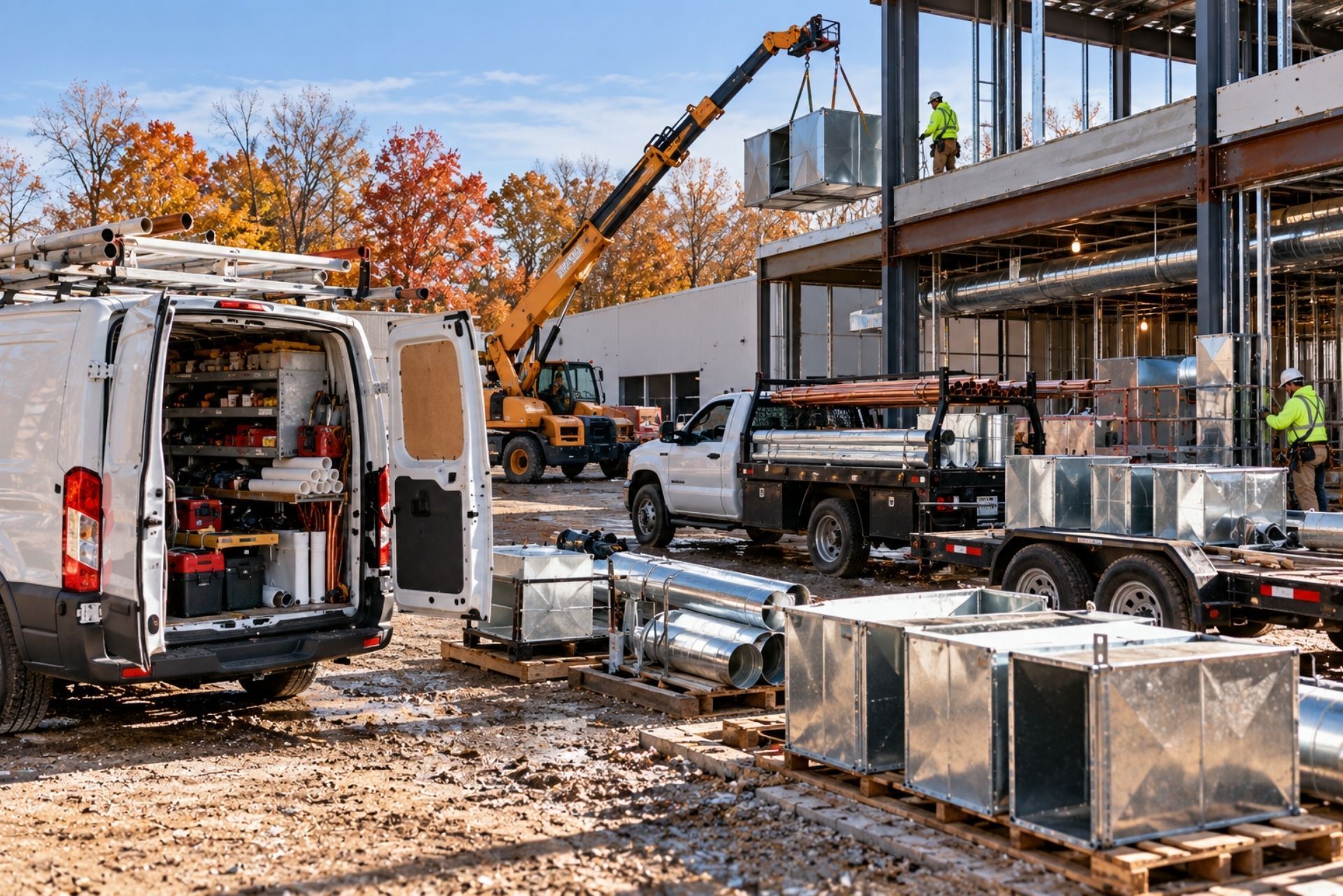
A single HVAC service van rear-ended at a red light in Columbus can trigger a chain reaction of costs: vehicle repair, lost revenue from a sidelined crew, a liability claim from the other driver, and damaged equipment in the cargo area. For Ohio mechanical contractors running fleets of service vans, box trucks, and sometimes employee-owned vehicles, the right
commercial auto insurance program isn't just a regulatory checkbox. It's the financial backstop that keeps your business running after an accident, theft, or lawsuit. This guide covers the specific auto insurance concerns Ohio HVAC, plumbing, and mechanical contractors face in 2026, from state-mandated minimums and tools-in-transit coverage to hired and non-owned auto protection and the claims process. Whether you're running three vans or thirty, the decisions you make about fleet coverage will shape your exposure for years.
Understanding Ohio Commercial Auto Requirements for Mechanical Contractors
Ohio law requires every vehicle used for business purposes to carry commercial auto insurance. A personal auto policy won't satisfy this requirement once a vehicle is titled to a business, lettered with a company name, or regularly used for commercial operations. The distinction matters because Ohio's Bureau of Motor Vehicles actively enforces registration and insurance matching, and a gap can result in fines, registration suspension, or denial of a claim at the worst possible time.
Ohio State Minimums vs. Industry Standards
Ohio's minimum liability limits are $25,000 per person and $50,000 per accident for bodily injury, plus $25,000 for property damage. These minimums have been in place for nearly 13 years without adjustment, during which time medical inflation and vehicle repair costs have risen significantly. Most insurance professionals recommend mechanical contractors carry at least $1,000,000 in combined single-limit (CSL) liability coverage, especially if your vans operate in metro areas like Cleveland, Cincinnati, or Columbus where accident severity and litigation costs run higher. The commercial auto market remains a "hard" line in 2026, meaning carriers are selective about who they write and at what price. Carrying higher limits can actually improve your standing with underwriters because it signals a risk-aware operation.
Why Personal Auto Policies Fail for HVAC and Plumbing Vans
Personal auto policies contain business-use exclusions that void coverage the moment a vehicle is involved in a commercial activity. If your
plumber drives a personally insured pickup to a job site and causes an accident, the personal carrier can deny the claim entirely. The vehicle's weight also matters: most service vans exceed the weight thresholds personal policies are designed for. A loaded
HVAC van with recovery tanks, brazing equipment, and sheet metal tools can easily weigh 8,000 to 10,000 pounds, well beyond what a personal policy contemplates. The result is a coverage gap that leaves both the driver and your business exposed.

By: Aaron McElwain
President of Bellwether Insurance
Essential Coverage Types for Your Fleet
Building the right policy for a mechanical contractor fleet means layering several coverage types together. No single endorsement handles everything, and the gaps between coverages are where expensive surprises live.
Liability, Collision, and Comprehensive Explained
Liability coverage pays for damage and injuries you cause to others. Collision covers your own vehicle after an accident regardless of fault. Comprehensive handles non-collision events: theft, vandalism, hail, flooding, and animal strikes. For Ohio contractors, comprehensive coverage deserves special attention. Copper theft rose 77% in 2025 as commodity prices hit roughly $5.00 per pound, and vans loaded with copper fittings and refrigerant lines are prime targets. A comprehensive policy with appropriate deductibles protects against these losses when vehicles are parked overnight at job sites or in shop lots.
Hired and Non-Owned Auto (HNOA) for Employee Vehicles
HNOA coverage is one of the most overlooked protections for small and mid-size contractors. It covers liability when employees use rental vehicles (hired auto) or their personal vehicles (non-owned auto) for business tasks. Under Ohio's respondeat superior doctrine, your business is liable for accidents that occur on "company time", including something as routine as an employee running to a supply house in their own truck. Without HNOA, your general liability policy likely excludes auto-related claims, and the employee's personal policy may deny coverage because the trip was work-related. The cost of adding HNOA to a commercial auto policy is modest, often a few hundred dollars annually, but it closes a liability gap that could otherwise produce a six-figure claim.
Inland Marine: Protecting Tools and Equipment in Transit
Standard commercial auto policies cover the vehicle itself but typically exclude the tools, diagnostic equipment, and materials inside it. Inland marine insurance, sometimes called a tools-in-transit floater, fills this gap.
HVAC contractors face
potential losses of $25,000 to $50,000 from a single overnight theft when recovery machines, manifold gauges, and specialized hand tools are stolen from a van. An inland marine policy covers these items whether they're in the vehicle, at a job site, or in transit between locations. You'll want to maintain an updated inventory with serial numbers and photos to streamline claims.
Comparison: Basic vs. Comprehensive Fleet Protection
Understanding the difference between a bare-minimum policy and a well-structured fleet program helps you see exactly where gaps appear.
Coverage Comparison Table
| Coverage Element | Basic Policy | Comprehensive Fleet Program |
|---|---|---|
| Liability Limits | Ohio minimum ($25K/$50K/$25K) | $1M combined single limit |
| Collision | Often excluded to save premium | Included with $500-$1,000 deductible |
| Comprehensive | Often excluded | Included (theft, weather, vandalism) |
| Hired & Non-Owned Auto | Not included | Included |
| Inland Marine / Tools | Not included | $50K-$150K per vehicle |
| Uninsured Motorist | State minimum only | Matches liability limits |
| Roadside / Towing | Rarely included | Included with rental reimbursement |
| Medical Payments | $1,000 if included | $5,000-$10,000 per person |
The premium difference between these two approaches might be 40% to 60%, but the basic policy leaves you self-insuring tens of thousands of dollars in potential losses. For a fleet of five to ten service vans, the comprehensive approach typically costs less per vehicle than the out-of-pocket expense of a single uninsured collision.
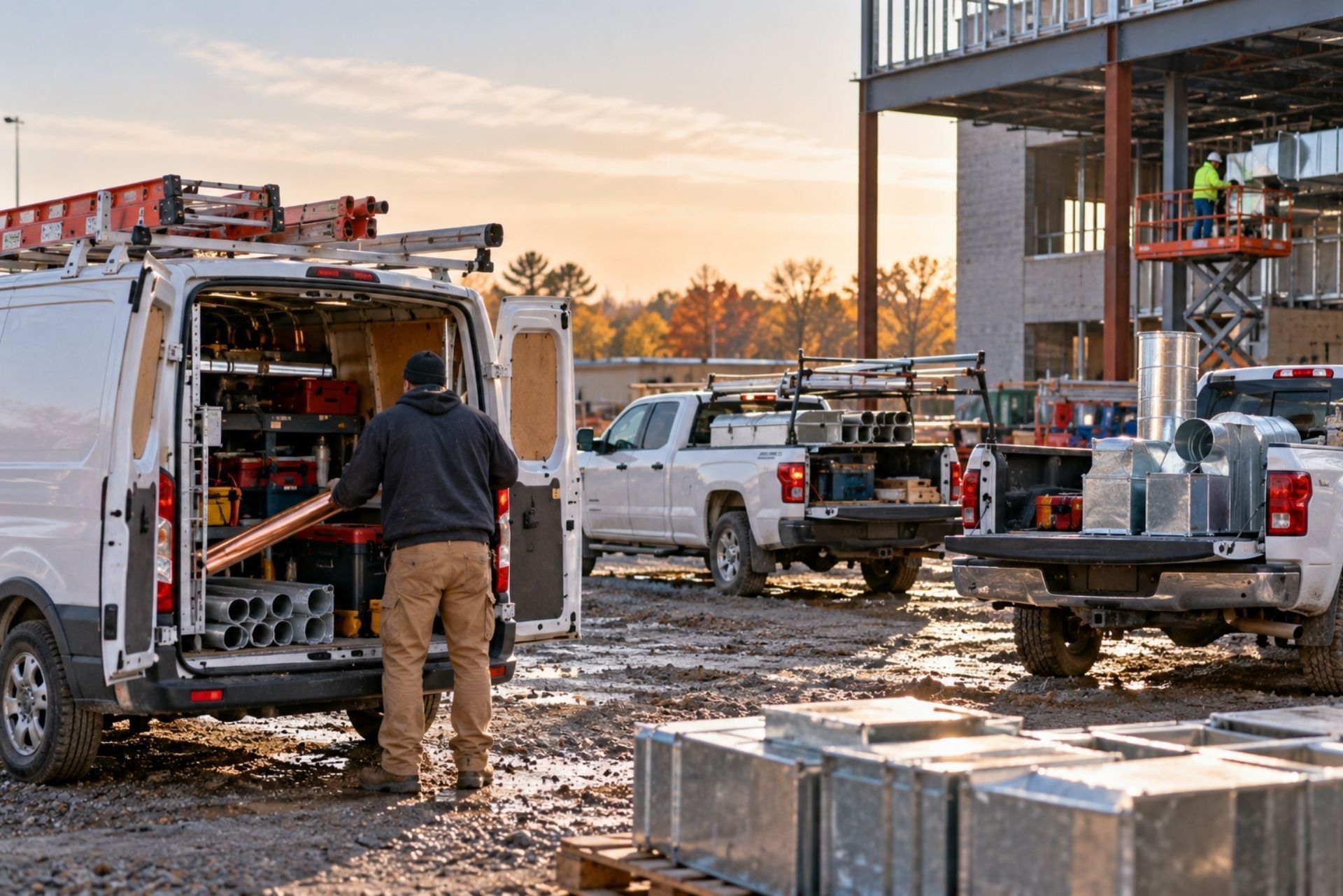
Your premium isn't arbitrary. Carriers use specific data points to price your fleet, and understanding these factors gives you direct control over your costs.
Driver Safety Records and MVR Checks
Every driver on your policy will have their Motor Vehicle Report (MVR) pulled at least annually. Drivers with at-fault accidents, DUIs, or multiple moving violations push your entire fleet premium upward. Ohio's BMV is currently reviewing approximately 5,000 non-domiciled CDL holders to comply with federal eligibility rules, and non-compliant drivers face a downgrade to a Class D license within 30 days. If any of your drivers hold CDLs, verify their compliance status now. A downgraded license mid-policy can void coverage for that driver and create an uninsured-driver situation on your fleet.
Vehicle Weight Classes and Usage Radius
Carriers classify vehicles by Gross Vehicle Weight Rating (GVWR) and typical operating radius. A Ford Transit Connect used for residential service calls within a 25-mile radius of your shop costs less to insure than a Ford F-550 box truck running 150 miles to a commercial job site. Heavier vehicles cause more damage in accidents, and wider operating radii increase exposure to unfamiliar roads and higher-speed highways. Be accurate when reporting these details to your agent. Underreporting your radius to save premium can result in a claim denial if an accident happens outside the stated zone.
Common Questions About Ohio Commercial Auto Insurance
These are the questions we hear most often from Ohio mechanical contractors evaluating their fleet coverage.
Do my employees need special licenses to be covered? For standard service vans under 26,001 pounds GVWR, a regular Class D Ohio driver's license is sufficient. If your fleet includes larger trucks or vehicles carrying hazardous materials like certain refrigerants, CDL requirements apply. Confirm each driver's license class matches the vehicles they operate, because a mismatch can void coverage.
Does the policy cover the expensive tools inside my van? A standard commercial auto policy does not cover tools, equipment, or materials inside the vehicle. You need an inland marine or tools-in-transit endorsement for that protection. Given that a fully equipped HVAC van can carry $25,000 to $50,000 in tools and equipment, this endorsement is not optional for most contractors.
What happens if an employee uses their own truck for a parts run? Your business can be held liable under Ohio's respondeat superior doctrine if that employee causes an accident while performing a work-related task. Hired and non-owned auto coverage protects your business in this scenario. Without it, you're relying on the employee's personal policy, which may deny the claim due to the commercial nature of the trip.
How does a claim affect my business insurance rates in Ohio?
A single at-fault claim can increase your fleet premium by 15% to 30% at renewal, depending on severity. Multiple claims within a three-year window can make your account difficult to place in standard markets, pushing you toward surplus lines carriers with higher rates. Investing in driver training and telematics can help control claim frequency and demonstrate risk management to underwriters.
Making the Right Choice for Your Mechanical Business
Commercial auto insurance for Ohio mechanical contractor fleets isn't a one-size-fits-all product. Your coverage needs to reflect the actual vehicles you operate, the tools they carry, the drivers behind the wheel, and the ways employees use personal vehicles for business tasks. A bare-minimum policy saves money on paper but creates exposure that can threaten your entire operation after a single serious incident.
Start by auditing your current fleet: vehicle titles, GVWR ratings, driver MVRs, and tool inventories. Compare those details against your existing policy to identify gaps, especially around hired and non-owned auto and inland marine coverage. The 2026 commercial auto market remains tight, so working with an agent who specializes in contractor accounts gives you access to carriers that understand your risk profile. A July 2026 Ohio Supreme Court ruling confirmed that arbitration clauses in insurance contracts can extend to tort claims, making it more important than ever to understand the dispute resolution terms in your policy before you need to file a claim. Get your coverage reviewed annually, keep your driver records clean, and treat your fleet insurance as a business asset rather than a grudging expense.
About The Author:
Aaron McElwain, CIC
As President of Bellwether Insurance, I’m passionate about helping individuals and businesses protect what matters most through honest advice and reliable coverage. With my Certified Insurance Counselor (CIC) designation and years of industry experience, I focus on simplifying insurance, building lasting relationships, and delivering peace of mind through every policy we write.
OUR PERSONAL INSURANCE COVERAGE IN OHIO
Explore Personal Insurance Coverage in Ohio
We only work with outstanding insurance companies that offer great value and continually impress our clients.

Home Insurance
Protecting Ohio homes, ensuring comfort

Life Insurance
Safeguard futures, cherish moments

Umbrella Insurance
Extra coverage, ultimate peace

Car Insurance
On the road, confidently insured

Condo & Renters Insurance
Customized policies, worry-free living

Motorcycle Insurance
Ride fearlessly, enjoy the journey
Choose Bellwether Insurance Today for Personalized Protection
Get a Plan Tailored to Your Lifestyle
Bellwether Insurance evaluates the risks you and your family face, taking into account your assets, personal circumstances, and individual requirements to create a tailored insurance solution.
Recover with Confidence
With our personal insurance coverage, you'll be prepared to bounce back from unforeseen events that could have left you and your family in a difficult financial situation.
Avoid Overpaying
Through customized insurance plans, you'll receive adequate coverage without unnecessary costs. At Bellwether Insurance, we strive to keep premiums cost-effective while providing the protection you need.
Review from our Clients
Customer Testimonials
See why Ohio residents work with Bellwether Insurance Agency in LaGrange, Ohio


Arun K.
Personal Insurance Client
After a decade old relationship with a premium and commercial insurance provider.. my switch to Bellwether has left me wondering why I waited so long. Primarily my experience has been dealing with Jessica Fox.. and she's been awesome to work with. She's super responsive, stays on top to follow up on your enquiries and really gets things done to delight customers.

Rob J.
Personal Insurance Client
Absolute pleasure to work with. Sandra has taken care of all my insurance needs for over 2 years now. Bellwether was able to save me quite a bit of money over previous carrier. Always giving heads up on any changes, or weather it’s time to check for new price she’s on top of it. I recommend them often to friends and family.

Nick W.
Personal Insurance Client
Aaron and Sandra are amazing! I faithfully stayed with my previous insurance for over ten years until I had them review my policies. Wish I would have done it years ago. Saved me quite a bit of money as well as gaining coverage what's not to love? They respond very quickly and professionally. I work in sales as a profession so it's great to see that level of attention and attentiveness provided here. Stop your search and give them a shot you won't regret it. On a side note even though it is something so small I love the fact they send laminated copies of insurance cards anytime you make a change. 10/10

Bobby P.
Personal Insurance Client
Bellwether Insurance is the best ever! Always there when I need them and always has the answers with quick replies. I will never go with a different Insurance Agent. If I could, I would give then a 10 Star review! Thanks Sandra for all your help!